How Business Electricity Prices Are Calculated in the UK
UK Commercial Energy Costs and Pricing Factors
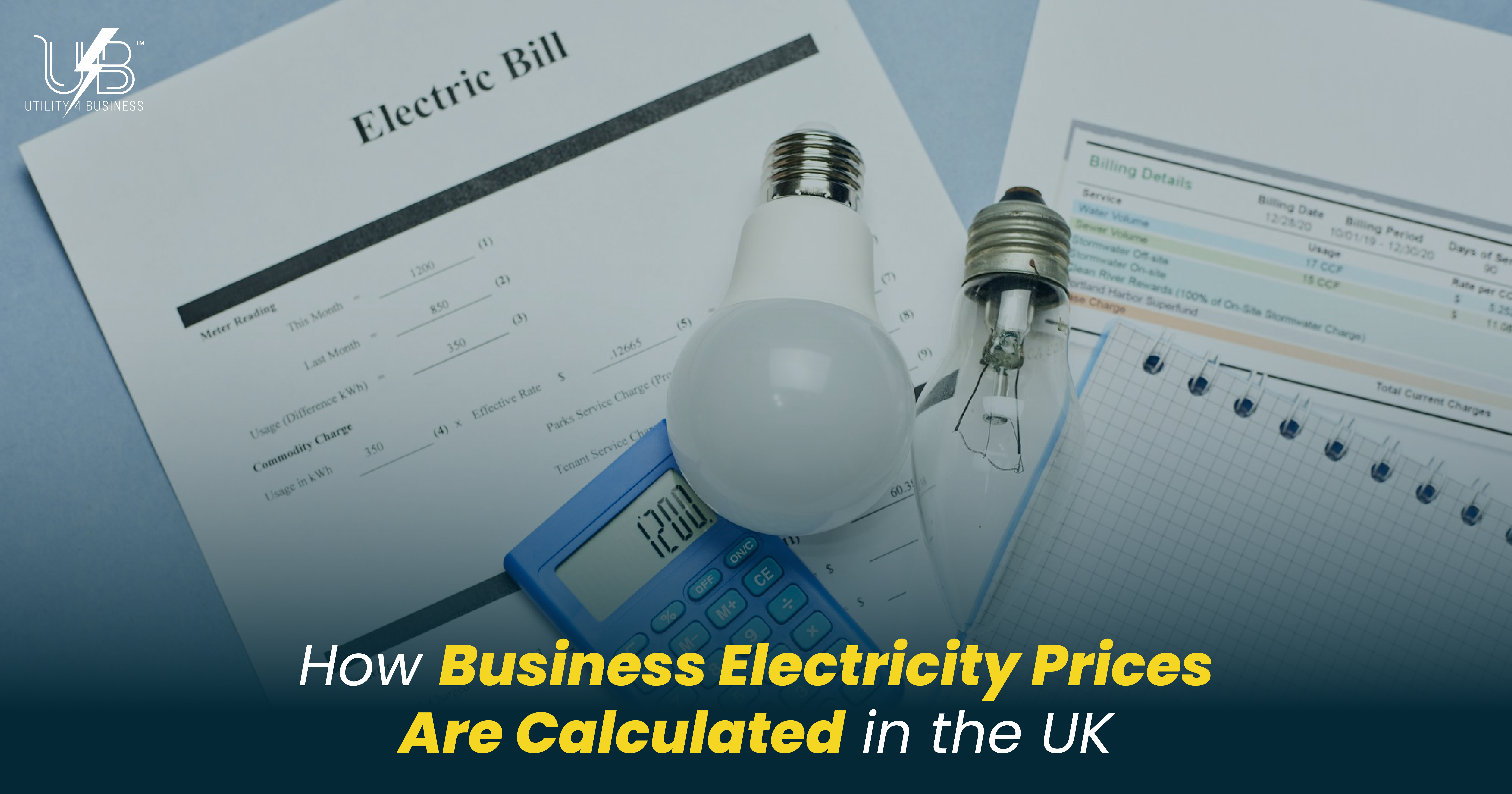
Running a business in the UK means you cannot treat electricity as a simple fixed cost. Your bill reflects many moving parts, and suppliers price contracts by combining those parts into a unit rate and a standing charge. If you understand how suppliers build that price, you can compare quotes properly, avoid surprises, and choose a contract that fits how your site uses power.
This guide explains how UK suppliers calculate business electricity prices and what typically sits behind a commercial electricity quote. It also explains why two businesses with similar usage can receive different prices, and what information you should prepare before you request quotes. Utility4Business works with UK organisations that want clearer comparisons and better control over energy spend, so we focus on what matters in real purchasing decisions rather than generic advice.
Wholesale Electricity Costs
What Wholesale Means In Practice
Wholesale electricity refers to the price suppliers pay to buy electricity before they sell it to your business. This price can change from day to day, and it can also change over longer periods. Market conditions influence it, including demand levels, generation availability, and fuel costs.
Wholesale cost matters because it forms a large part of business electricity prices, especially for contracts where the supplier locks a price for a fixed term. Even when you sign a fixed-rate deal, the supplier still bases that deal on wholesale market levels at the time you agree the contract.
How Suppliers Buy Electricity For Business Customers
Suppliers rarely buy all the electricity at a single point in time. They typically buy in stages to reduce risk. When they price a contract for your business, they build in the cost of those purchases and the risk they take if the market moves against them.
This approach affects pricing in two common contract styles:
- Fixed Contracts: The supplier offers a fixed unit rate (and standing charge) for a set term. The supplier carries much of the market risk during that term.
- Flexible Or Pass-Through Contracts: The supplier may charge wholesale costs closer to real market prices, then add other costs as separate items. Larger users often choose this because it can offer transparency, but it can also expose the business to price swings.
When you compare commercial electricity offers, you should always check which style you are looking at. Two contracts can both sound “fixed” while still handling certain costs differently.
Network Charges
Electricity must travel from power stations and generators to your premises. Networks make this possible, and network owners charge for building, maintaining, and operating that system. Network charges often form a significant share of total cost, and they vary by location and by usage pattern.
Transmission Charges
Transmission charges relate to the high-voltage network that moves power across Great Britain. Even if your business does not connect directly to the transmission system, the overall cost of running that national network still influences charges applied through the supply chain.
In many small and medium business contracts, suppliers fold transmission-related costs into the unit rate rather than listing them separately. For some larger sites and contract structures, suppliers may show them as pass-through charges.
Distribution Charges
Distribution networks deliver electricity locally to your street, estate, or industrial area. Distribution charges often vary more by region than transmission charges. This creates one of the clearest reasons why business electricity prices differ across the country, even for similar usage volumes.
Distribution charges can also vary by time of use, particularly for half-hourly metered customers. If your site uses most of its electricity during high-demand periods, distribution charges can rise compared with a site that uses more power overnight or at quieter times.
Why Location Changes Your Price
Your business address links to a distribution region. That region has its own network costs and charging structures. In simple terms, a supplier will not offer the same all-in price for every postcode because the network costs behind that postcode differ.
This matters when you operate multiple sites. A price that looks competitive for one location might not stay competitive for another. Utility4Business can help businesses compare contracts across locations in a consistent way so the decision reflects real cost, not only headline rates.
System Balancing And Operating Costs
The electricity system must stay balanced in real time. If demand rises suddenly, the system operator needs to respond quickly to keep the system stable. The market includes costs linked to these balancing actions and system services.
Suppliers account for these costs in different ways. Some include them in all-in pricing. Others charge them as pass-through items for certain customer types. Even when suppliers include them within one unit rate, they still influence the rate level.
For businesses, the practical point is simple: your price not only reflects the energy you use, but also the system cost of keeping electricity available at the times you need it.
Policy And Obligation Costs
UK electricity bills include costs linked to energy and environmental schemes. These items can change over time due to updates in policy and funding. They can rise even when wholesale prices fall, and this can push overall commercial electricity costs upward.
Suppliers often handle these charges in one of two ways:
- They include them in the unit rate and standing charge as part of an all-in price.
- They show them as separate items within a pass-through structure, mainly for larger customers.
When you assess offers, you should check whether the supplier fixed these items or left them as variable pass-through costs. A quote can look cheaper on day one but become more expensive if key obligation costs increase during the contract term and the supplier passes them through.
Metering, Data, And Billing Costs
Why Meter Type Matters
Your meter setup affects how the industry measures your consumption and how suppliers price your contract. A standard non-half-hourly meter uses estimated profiles and periodic readings. A half-hourly meter records consumption in 30-minute intervals, which gives a clearer view of when you use electricity.
This difference influences pricing because many charges are linked to the time of use. The more detailed your data, the more precisely the supplier can price your consumption pattern.
Common Metering And Data Costs
Metering and data costs can include:
- Meter operation and maintenance
- Data collection and processing
- Reading services and site visits
- Data handling for billing and settlement
Some suppliers bundle these costs into standing charges. Others list them as separate fees. If you compare offers without checking this point, you may think one supplier charges more when the difference actually lies in how they structure the quote.
The Impact Of Poor Data
Inaccurate readings or incorrect meter details often lead to estimated bills, billing disputes, and time-consuming corrections. These issues do not always show up as “price”, but they create real cost through admin time and cash flow problems.
A clean comparison starts with clean data. Utility4Business encourages businesses to provide accurate MPAN details and recent consumption history so quotes reflect reality and billing runs smoothly after the switch.
Supplier Costs And Margin
Suppliers add their own operating costs and margin on top of third-party charges. This covers:
- Billing and account service
- Credit risk and debt management
- Working capital to buy electricity before payment arrives
- Compliance and administration
- Profit margin
Two suppliers can face similar third-party costs and still offer different rates because they run different operating models and hold different risk positions. Contract terms also influence supplier risk. If your business pays by direct debit and has stable consumption, some suppliers may price more keenly than they would for a business with a higher risk profile.
This is one reason Utility4Business focuses on total value, not only headline rates. A contract that looks slightly higher can still suit you better if it reduces disputes, improves billing quality, and avoids hidden add-ons.
Taxes On Business Electricity Bills
Business electricity bills can include taxes and levies that sit outside the supplier’s base price. Two common elements are:
VAT
VAT applies to electricity supply, and the rate can depend on your situation and eligibility. Many businesses pay standard VAT, but specific cases can differ. Your finance team should confirm the correct treatment for your organisation.
Climate Change Levy
The Climate Change Levy applies to energy supplied to non-domestic users, with certain reliefs and exemptions in defined circumstances. Suppliers may show it as a separate line or treat it as part of the billed total, depending on the bill format.
When you compare quotes, make sure you know whether figures include or exclude these items. If one quote includes a levy and the other does not, the comparison will mislead you.
Unit Rate And Standing Charge Explained
What The Unit Rate Covers
The unit rate, shown in pence per kWh, reflects the cost of electricity you consume plus a range of embedded costs depending on how the supplier packages the contract. In all-in pricing, the unit rate can include wholesale, many network charges, policy costs, and supplier costs. In pass-through pricing, the unit rate may reflect a smaller set of items, with the rest billed separately.
What The Standing Charge Covers
The standing charge is a daily cost that helps recover fixed elements, such as metering services, account costs, and certain fixed industry charges. Suppliers set standing charges differently. One supplier may offer a lower unit rate and a higher standing charge, while another offers the opposite.
That is why you should compare the annual cost rather than the unit rate alone. A low unit rate can look attractive, but a high standing charge can increase total spend, especially for low-usage sites.
All-In Pricing Versus Pass-Through Pricing
All-In Pricing
All-in pricing gives you a simpler headline quote, usually with:
- One unit rate
- One standing charge
- Fewer separate lines on the bill
This structure supports easier budgeting because most costs remain fixed for the contract term. It often suits small and medium organisations that want stable outgoings and straightforward bills.
Pass-Through Pricing
Pass-through pricing separates certain costs and charges them based on actual rates during the contract. This can improve transparency, but it can also expose you to increases you cannot control.
Larger users sometimes prefer pass-through structures because they can manage risk with a more active approach, including flexible purchasing strategies and tighter monitoring of interval data.
If you do not have the time and tools to manage these moving parts, all-in pricing can often deliver a better balance of clarity and control.
Utility4Business helps businesses compare these structures fairly by showing what sits inside the quote and what sits outside it. This makes it easier to judge real cost and real risk.
Why Quotes Differ For Similar Businesses
You might compare your contract to another business and wonder why you pay more. Several practical reasons can explain this difference.
Different Locations
Distribution charges vary by region, and this influences all-in pricing. Two similar shops, one in Manchester and one in Bristol, can receive different quotes even with similar annual usage.
Different Meter Types
A half-hourly meter can lead to pricing that reflects time of use more directly. If your site uses electricity during peak periods, a supplier may price your profile higher than a site with flatter consumption across the day.
Different Consumption Patterns
Two businesses with the same annual kWh can still cost suppliers different amounts to serve. A business with sharp peaks and short bursts may create more risk and higher costs than a business with steady usage.
Different Contract Terms
Longer contracts can sometimes reduce pricing risk for the supplier, but they can also lock you into higher market levels if you sign at the wrong time. Shorter contracts can offer flexibility but may carry higher risk pricing.
Different Credit And Payment Profiles
Suppliers price risk. If a supplier expects higher credit risk or slower payment, they may price more cautiously.
How To Compare Business Electricity Prices Properly
A structured comparison helps you avoid false savings and poor contract fit.
Step 1: Collect Accurate Information
Prepare:
- Business address and postcode
- MPAN and meter details
- Current supplier and contract end date
- Recent bills or annual kWh estimate
- Payment preference and billing frequency needs
- Opening hours and major equipment, if available
Step 2: Confirm What The Quote Includes
Ask whether the quote:
- Includes network and policy costs in the unit rate
- Includes metering and data costs
- Includes or excludes CCL and VAT
- Contains pass-through items
Step 3: Compare Annual Cost
Calculate:
- Annual usage cost = unit rate × annual kWh
- Standing charge cost = standing charge × 365
- Add any listed extra charges
This approach gives you a like-for-like view.
Step 4: Review Key Contract Terms
Look at:
- Renewal and rollover terms
- Notice periods
- Billing terms and dispute handling
- Any exit fees or conditions
Utility4Business can support each step by sourcing quotes and presenting them in a clear structure so you can compare on total cost and contract quality, not only on headline numbers.
Practical Steps To Improve Value Before You Renew
You do not need to change your whole operation to improve outcomes. Small steps can help.
Check Your Meter Details Early
Mistakes in MPAN or meter type can lead to wrong quotes and messy bills. Confirm details well before renewal.
Track Your Real Usage Pattern
If you have half-hourly data, review peak periods and unusual spikes. If you do not, review operational hours and major loads, such as refrigeration or heating. Even basic insight can help suppliers price more accurately.
Avoid Last-Minute Decisions
When you rush, you accept whatever sits in front of you. Start the process early enough to compare structures and terms carefully.
Use A Specialist Comparison Service
Utility4Business focuses on business energy, which means we understand how suppliers build pricing and where hidden differences often sit. We help you compare business electricity prices with clarity, and we support businesses that want a smoother switch and cleaner billing after the change.
Conclusion
Suppliers calculate business electricity prices in the UK by combining wholesale electricity costs with network charges, system and balancing costs, policy and obligation charges, metering and data costs, and supplier operating costs and margin. Taxes can then sit on top depending on your situation. Suppliers also decide how to package these elements, which changes what you see in the unit rate and standing charge. That packaging often explains why quotes look different even when two businesses use similar amounts of electricity.
A strong comparison focuses on total annual cost, checks what sits inside and outside the quote, and reviews contract terms that can change the real outcome. If you want a clearer view of commercial electricity pricing and a simpler comparison process, Utility4Business can help you review quotes properly and choose a contract that suits your site, your usage pattern, and your budget.
Frequently Asked Questions
What Makes Up Business Electricity Prices In The UK?
Suppliers build business electricity prices from wholesale electricity costs, network charges (transmission and distribution), system balancing costs, policy and obligation costs, metering and data costs, supplier operating costs, and margin. Taxes such as VAT and the Climate Change Levy can apply on top, depending on your situation.
Why Do Two Suppliers Give Very Different Quotes For The Same Business?
Quotes can differ because suppliers package costs differently. One quote may include more items in the unit rate and standing charge, while another may pass some charges through separately. Differences in supplier risk pricing, payment terms, and contract length can also change the total price.
What Is The Difference Between Unit Rate And Standing Charge?
The unit rate is what you pay per kWh used. The standing charge is a fixed daily cost that helps cover fixed elements such as account costs, metering services, and certain industry charges. You should compare both, because a low unit rate with a high standing charge can still cost more overall.
Are Business Electricity Prices The Same Across The UK?
No. Network charges, especially distribution charges, vary by region. This means commercial electricity prices can differ even when usage looks similar.
How Does My Meter Type Affect My Commercial Electricity Quote?
Meter type affects how suppliers measure your consumption and how they price your usage pattern. Half-hourly meters record usage in 30-minute intervals, so pricing can reflect time-of-use more closely. Non-half-hourly meters rely more on profiles and periodic readings.
What Does “All-In” Pricing Mean?
All-in pricing usually means the supplier bundles most costs into one unit rate and a standing charge. It can make budgeting easier because fewer items move during the contract term. You should still confirm what the supplier includes, because some “fixed” deals can still include pass-through elements.
What Are Pass-Through Charges?
Pass-through charges are costs that the supplier does not fix in the unit rate. Instead, they bill them at the actual rates set by networks or industry bodies during the contract. This can improve transparency, but it can also increase bill changes during the term.
Do Wholesale Prices Directly Decide My Final Price?
Wholesale costs play a major role, but they do not decide everything. Network charges, policy costs, metering costs, and supplier costs also influence the final price. Wholesale prices can fall while your total bill stays high if other charges rise.
How Does Contract Length Affect Business Electricity Prices?
Contract length affects supplier risk and how they buy electricity. A longer term can sometimes offer a stronger rate, but it can also lock you into a price level if the market moves. A shorter term can offer flexibility, but suppliers may price more cautiously. Utility4Business typically recommends comparing several terms side-by-side using the total annual cost.

Find This Article Helpful? Share It Now!
At Utility4Business, we offer top-notch customer support and business utility solutions for businesses across the UK. Consider sharing this article and helping others discover how our expertise can add value to their business success.

Read Our Latest Posts
Explore our latest blog posts and learn how Utility4Business can support your business growth with tailored utility solutions and services. Stay ahead of the curve with the latest information from industry experts and take advantage of our user-friendly comparison services to find the best business deals.


Get Connected
At Utility4Business, our team of experts can help you figure out the highest-value business utility deals that will help your business grow over time.